
Aquaculture
Ngā Rawa Moana | Coastal Consent & Aquaculture
He kupu whakataki | Overview
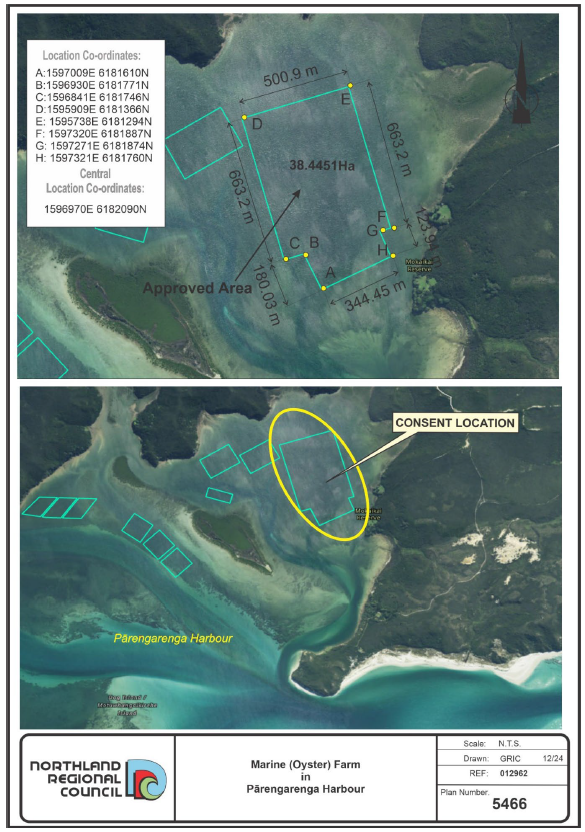
Muriwhenua Incorporation holds a 38 hectare coastal consent in Pārengarenga Harbour, originally granted for 30 years and successfully renewed in December 2024 for a further 25 years. The consent authorises farming of both pacific and rock oysters within the approved area. Refer to Plan Number 5466 for the Muriwhenua Inc consent location within Parengarenga Harbour.
This consent enables aquaculture activity on behalf of our shareholders. represents a long term opportunity to protect our relationship with the moana, create local employment, and grow a sustainable income stream, while upholding our responsibilities as kaitiaki.
Aquaculture sits alongside forestry, tourism, housing, and environmental protection as part of a broader strategic balanced approach to caring for our whenua and moana for future generations.
He aha te Coastal Consent? | What does our Coastal Consent entitle us to?
The coastal consent allows Muriwhenua Incorporation to maintain and undertake oyster farming activities consistent with resource consent conditions. Muriwhenua Incorporation may enter partnerships or commercial arrangements that support local employment, skills development and long term economic returns for shareholders. In doing so, Muriwhenua Incorporation must ensure activities are managed in accordance with environmental standards and tikanga Māori with regulatory oversight by Northland Regional Council (NRC). The coastal consent does not require oyster farming to be fully developed immediately. It protects our right and option to use this space, now and into the future.
What is the kaupapa of our aquaculture project?
To develop aquaculture at a pace and in a way that aligns with shareholder aspirations, environmental protection, and long term viability. The Committee of Management is currently working with sector specialists and potential partners and exploring pathways that support local employment and training. We aim to build capability so Muriwhenua whanau can ultimately manage its aquaculture interests itself as a reliable, sustainable income stream, rather than short term returns. No final commercial model has been locked in. This is deliberate and reflects a careful, staged approach.
He pātai nui | What this does – and does not – mean for shareholders
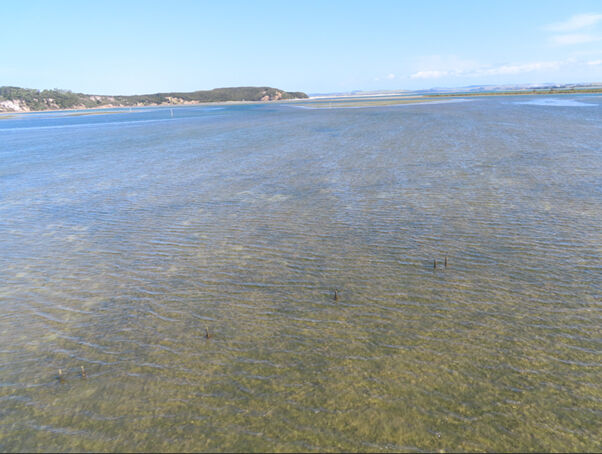
The coastal consent secures our long term rights in the harbour and ensures aquaculture remains a strategic opportunity. Decisions are being taken carefully, with environmental and cultural responsibility front of mind. The Committee of Management want to ensure any future development can support whānau employment and hau kāinga based opportunity.
It does not commit Muriwhenua Incorporation to a single operator or model, guarantee immediate income, override tikanga, community voice, or environmental protection, or that the harbour is “locked up” or removed from cultural significance.
He tiro whakamua | Looking ahead
The renewal of the coastal consent to 2050 means Muriwhenua Incorporation is well positioned to take advantage of aquaculture opportunities when the timing is right, negotiate from a position of strength and align aquaculture with broader kaupapa such as jobs, environmental protection, hau kāinga resilience and intergenerational wellbeing.
Memorandum of Understanding with Moana New Zealand
Ngā Rawa Moana | Partnership kaupapa
He kupu whakataki | Overview
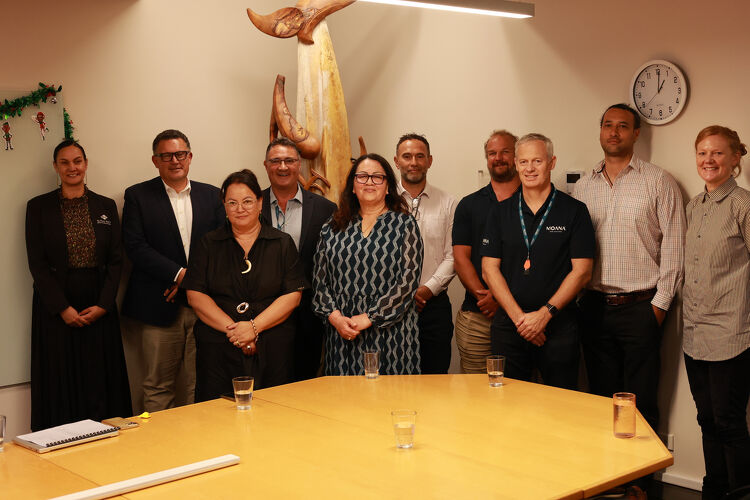
In December 2025 Muriwhenua Incorporation entered into a Memorandum of Understanding (MoU) with Moana New Zealand, an iwi owned seafood company, as part of our ongoing commitment to responsible development of our marine assets and to creating long term benefits for our shareholders and hau kāinga.
He aha te MoU? | What is a Memorandum of Understanding?
A Memorandum of Understanding is a relationship based agreement. It is not a commercial contract, but a framework that:
- sets out shared principles and intentions
- provides a foundation for collaboration; and
- enables both parties to explore opportunities together.
He aha te kaupapa o te MoU? | Purpose of the partnership
The purpose of the MoU is to support the responsible redevelopment and future productivity of Muriwhenua’s aquaculture interests, while building pathways for local benefit. Under the MoU, Muriwhenua Incorporation and Moana NZ have agreed to:
- Work collaboratively to re establish aquaculture productivity over time
- Share knowledge, expertise, and resources where this supports mutual benefit
- Promote local economic development and employment opportunities, particularly for Muriwhenua whānau
- Encourage community engagement, recognising the importance of hau kāinga voice and tikanga Māori
He aha i kōwhiria a Moana NZ? | Why Moana New Zealand?
Moana NZ is a wholly iwi owned seafood company, with a focus on sustainable fisheries and aquaculture, Māori values based governance and building long term returns for Māori shareholders. Partnering with another Māori entity ensures that values such as kaitiakitanga, mana motuhake, and whanaungatanga remain central to discussions about development in our moana.
He aha kāore tēnei MoU e mahi? | What this MoU does not do
It is important for shareholders to understand the MoU does not:
- commit the Incorporation to a specific commercial deal
- transfer ownership or control of any Muriwhenua assets
- lock in any aquaculture operator or development model
- override Committee of Management decision making or shareholder interests
Any future commercial arrangements would be subject to separate agreements, governance oversight, and appropriate consultation.
He pēhea te hāngai ki tō tātou tirohanga? | Alignment with our Vision and Purpose
The MoU with Moana NZ directly supports Muriwhenua Incorporation’s stated Vision and Purpose:
“Enhance the aspirations of the Muriwhenua Incorporation shareholders past, present and future by creating development opportunities with cultural, economic, environmental and social outcomes.”
It also aligns with the Incorporation’s strategic priorities of strengthening Māori led partnerships, growing economic resilience, supporting local employment and protecting the taiao and marine ecosystems.